
Renovate or Rebuild? The Decision Framework for Aging Bali Pools
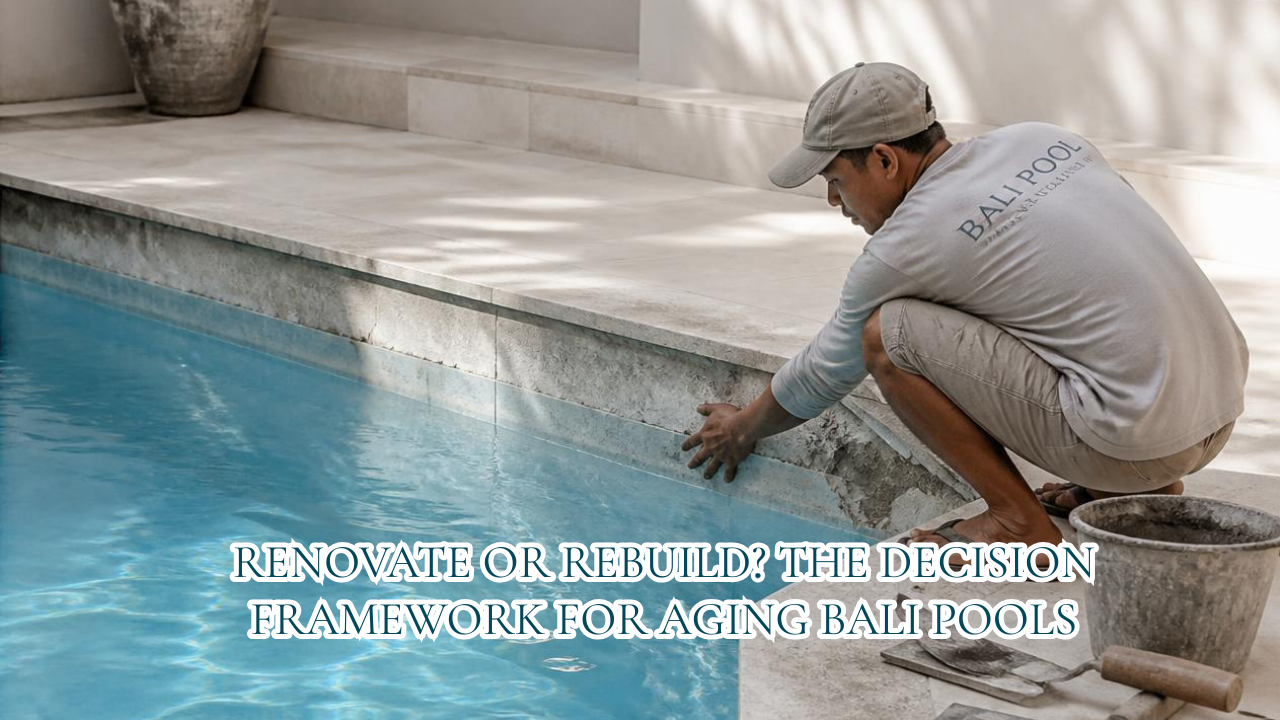
Every aging pool eventually delivers its owner to the same fork: pour money into renovating what exists, or accept the bigger number and rebuild properly? Both camps have horror stories — the renovation that became archaeology, the rebuild that was never necessary. The decision has a framework, and it starts below the waterline:
The structural verdict decides first
Renovation renews the skin and systems of a sound shell; it cannot save an unsound one. The disqualifiers that point to rebuild: active structural cracking (the through-line crack that telegraphs across tiles), a shell that leaks from multiple fronts, evidence of ground movement in coping and deck, or original construction so thin that every repair finds new problems. A survey with pressure testing settles this in a day — and it is the day that protects you from renovating a lost cause or demolishing a sound one.
The cost crossover, honestly
The working rule: when the honest renovation scope — resurface, repairs, equipment, the accumulating extras — passes roughly 60–70% of the rebuild number, rebuild starts winning: you pay marginally more and receive exactly the pool you want (placed right, shaped right, built right) with a fresh clock on everything. Below that line, renovation’s economics are hard to argue with — most of a transformation for a fraction of the outlay.
The tie-breakers
- Is the pool in the wrong place or shape? Renovation cannot move water; if the placement is the real problem, rebuild answers the actual question
- The ownership horizon: fifteen more years argues for the rebuild’s fresh clock; a pre-sale timeline argues renovation, hard
- The calendar: renovation fits a booking-gap window; rebuild is a season commitment
Survey first, crossover maths second, honesty throughout — the fork is only frightening without the framework.
Standing at the fork?
Book the deciding survey — structural check, pressure test, and both numbers side by side in writing.