
Pool Resurfacing Options in Bali: Render, Tile, Pebble and Stone Compared
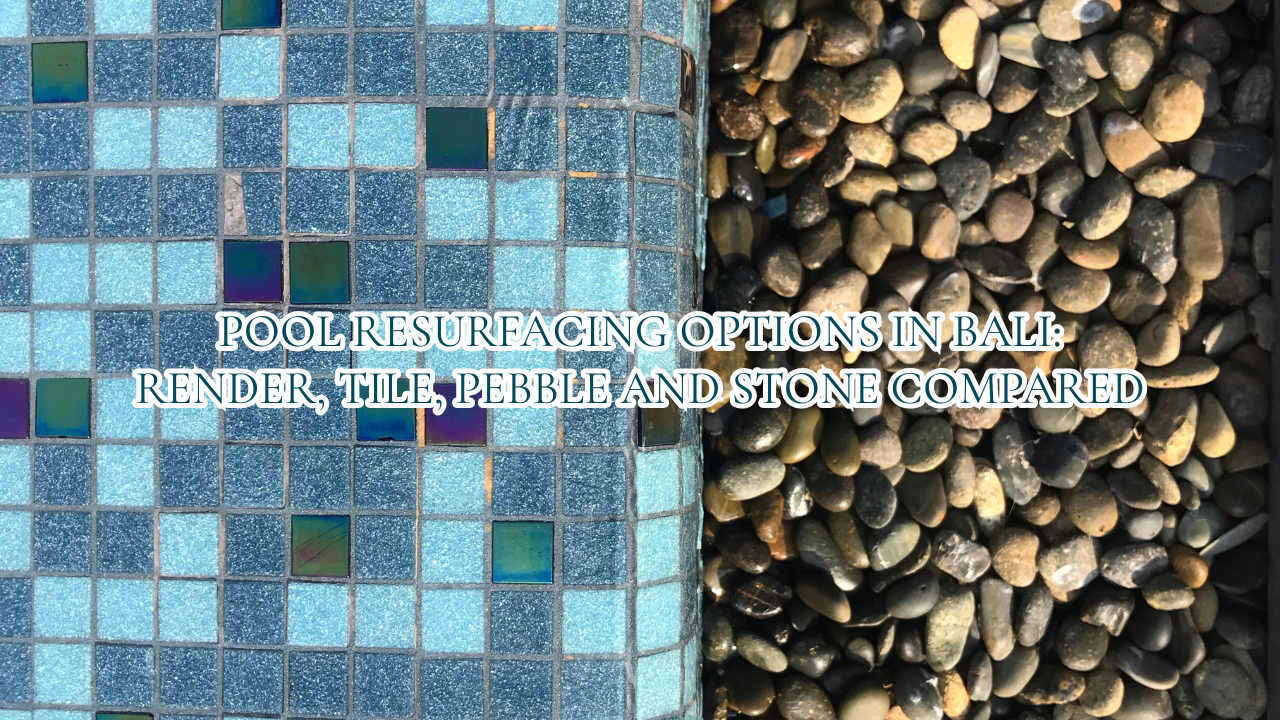
Resurfacing is the heart of most pool renovations: the structure is sound, but the surface — rough, stained, dated — is finished. The question becomes which new skin the pool gets, and the four families each argue a different case. The comparison, Bali-honest:
The four surfaces
- Cementitious render/plaster: the seamless, budget-respectful classic — smooth, tintable, fastest to apply; honest lifespan in tropical chemistry is the shortest of the four, and its future is eventual re-rendering (see surface lifespans)
- Pebble/aggregate finishes: render’s tougher sibling — stone aggregate in the mix for texture, durability and a natural look that hides minor sins; underfoot feel divides opinion, so touch a sample first
- Full tile (ceramic/mosaic): the most durable, cleanable, colour-controlled option — higher initial cost, longest service life, and the retile process applies
- Natural stone: the Bali signature — Sukabumi’s luminous turquoise or dark batu candi drama; premium cost, premium result, and a craft-dependent installation
How to choose
Decide by three questions: the water colour you want (the surface IS the colour — dark mirror vs lagoon vs classic blue), the ownership horizon (selling in three years argues differently than keeping for fifteen — the resale lens), and the maintenance appetite — porous surfaces in tropical chemistry want disciplined care; glazed ones forgive more.
The part that outranks the choice
Whichever skin you pick, the substrate work beneath it — crack repair, waterproofing, proper cure — matters more than the finish brand. A premium surface over unresolved problems is the most expensive way to relocate a failure by two years.
Choose the water first, the horizon second, the skin third — and the substrate always.
Surface due its successor?
We bring wet samples of all four families to your villa — choose in your own light, priced side by side.