
How Much Does It Cost to Build a Pool in Bali – 2026 Cost Guide
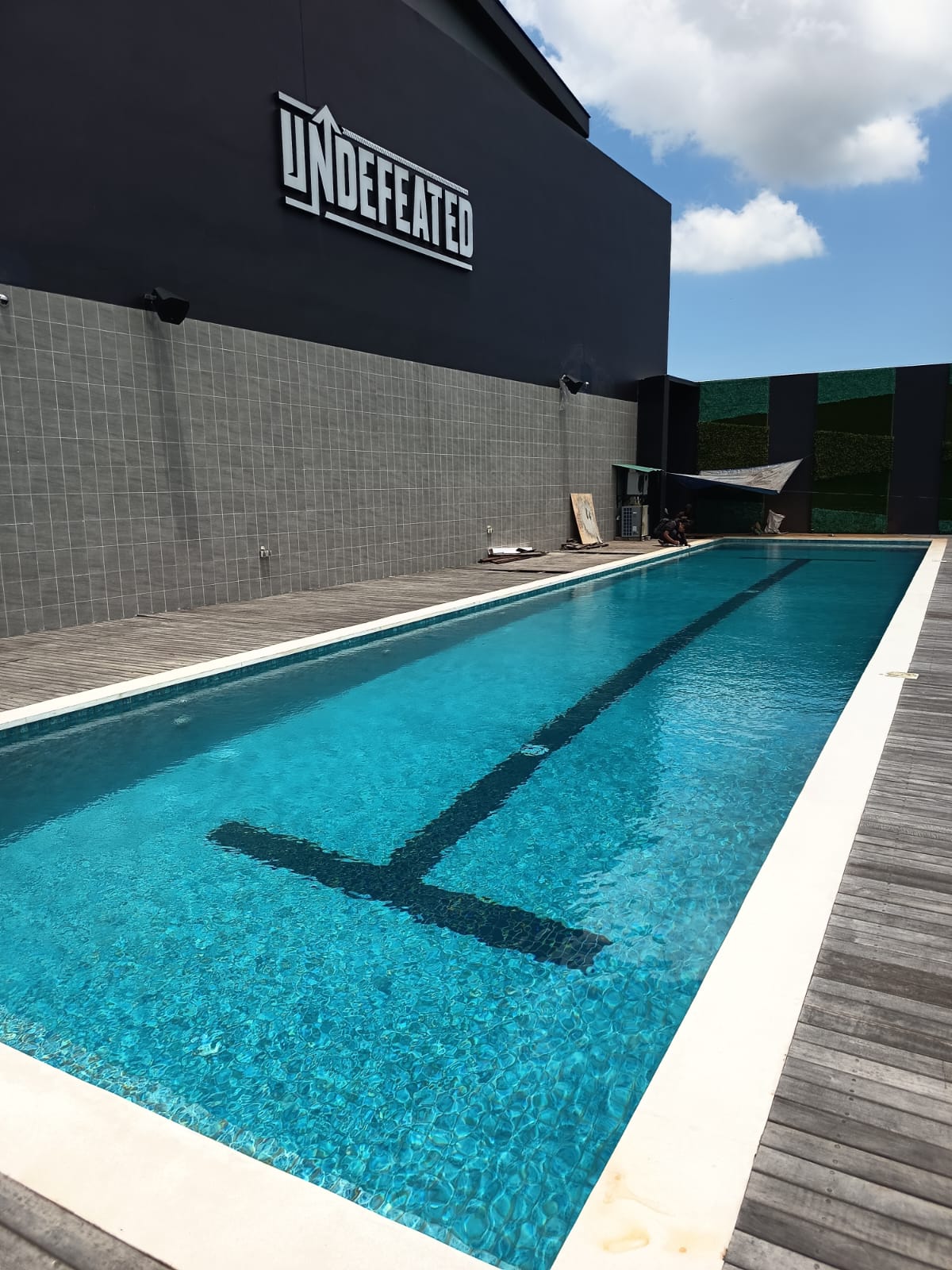
Most pool builders in Bali won’t give you a number until you’ve filled in a form and waited three days. That’s no help when you’re planning a villa build or a renovation and just need to know whether a pool fits your budget.
So here’s the honest answer up front. A quality-built private pool in Bali typically costs between IDR 70 million and IDR 300 million (roughly USD 4,500–19,000), with most standard villa pools landing around IDR 150–250 million. A small plunge pool can come in under IDR 100 million; a large pool with an infinity edge, spa, or a cliffside site can run well above IDR 300 million.
The rest of this guide shows you exactly what drives that number — a full cost breakdown, price by size, and the one thing that separates a pool that lasts 25 years from one that starts rusting and cracking in three. If you’re building in Bali’s climate, that last part matters more than the headline price.
Quick answer: pool build cost by size
Market ranges — replace with Bali Pool Care’s real project figures where possible.
| Pool type / size | Typical use | Estimated build cost (IDR) | Approx. USD |
|---|---|---|---|
| Plunge / small (≈ 5×3 m) | Compact villas, courtyards | IDR 70–110 million | ~$4,500–7,000 |
| Standard villa (≈ 8×4 m) | Most 2–3 bed villas | IDR 130–220 million | ~$8,000–14,000 |
| Large / family (≈ 10×4–12×5 m) | Bigger villas, rentals | IDR 220–350 million+ | ~$14,000–22,000+ |
| Feature (infinity, spa, cliffside) | Premium & view villas | IDR 350 million+ | ~$22,000+ |
These are finished-pool estimates including structure, equipment, finish and first fill. Where you land inside each band depends on finish, site, and features — covered below.
The full cost breakdown: where the money goes
A pool price isn’t one number — it’s several. Here’s a real worked example for a standard 3×10 m pool, 1.5 m deep (30 m² surface, 45 m³ volume), using market rates:
- Construction (structure/shell): reinforced concrete is quoted at roughly IDR 4 million per m² as a baseline — for 30 m², about IDR 120 million. This is the foundation, before finishes and equipment.
- Equipment (pump + filter): a quality system (e.g. Hayward-grade) for a 45 m³ pool runs around IDR 36 million. Don’t cut corners here — the pump and filter are what keep the pool from going green later.
- Excavation & soil disposal: around IDR 150,000 per m³, so roughly IDR 7 million for this size (more on sloped or rocky ground).
- Finish (tile / stone): ceramic is the most affordable, natural stone gives the classic Bali look (~IDR 145,000/m²), mosaic is the premium finish. Finish choice can swing the total meaningfully.
- First water fill: delivered tank water at ~IDR 550,000/tank, ~6 tanks for a 45 m³ pool, about IDR 3.3 million.
- First-time water treatment: initial chemicals (chlorine, pH balancers, etc.) around IDR 1.5 million.
- Permits & compliance: Bali now requires a PBG (building approval) before construction — factor this in, especially for a standalone build.
Add those and a standard 3×10 m pool lands around IDR 167 million+ (~$10,000) all-in. Change the finish, the site, or the features and the number moves — which is exactly what the next section covers.
What drives the price up or down
Seven levers decide where your quote lands:
- Size and depth. Priced per square metre, so footprint is the biggest driver. Depth adds volume — more water, more chemicals, more running cost — so don’t build deeper than you need.
- Site and terrain. This is the big Bali variable. Sloped or cliffside plots (the ones with the views — Uluwatu, the Bukit, hillside Ubud) need extra excavation, retaining walls and structural support, which can significantly increase cost. A flat site is far cheaper to build on.
- Finish material. Ceramic (budget) → natural stone (classic Bali) → mosaic (premium). Your finish is where “standard” becomes “luxury” on the invoice.
- Features. Infinity/negative edge, an attached spa or jacuzzi, water features, integrated lighting and automation — each adds cost and complexity.
- Coastal exposure. Building near the ocean means salt air, which demands marine-grade materials and proper waterproofing. Skipping this to save money is how coastal pools fail early (see below).
- Access. Remote or hard-to-reach villas add transport cost for materials and equipment.
- Equipment quality. Cheap pumps and filters cost less now and fail sooner — false economy on the one system you can’t do without.
The cheap-quote trap: why the lowest bid costs the most in Bali
This is the part no budget builder will tell you. Bali’s climate — intense humidity, monsoon rain, and salt air near the coast — punishes poor construction. A pool built with thin concrete, under-spec steel, and no proper waterproofing can look flawless in photos on day one and start showing cracks, leaks, rust and rising damp within 3–5 years. In the tropics, nature always wins the argument with a cheap build.
That failure is expensive twice: you pay for the cheap pool, then you pay again to fix or rebuild it — plus the leaks and constant problems in between. A properly engineered pool costs more up front and less over its life.
What actually protects your investment:
- Reinforced concrete built to proper structural spec, not the thinnest shell that holds water
- Correct waterproofing — the difference between a dry pool and a slow leak into your foundation
- Marine-grade materials for anything coastal, to resist salt corrosion
- Quality equipment sized correctly for the pool
The cheapest quote almost always saves money in exactly these places — which are exactly the places that fail. Judge a pool builder on how they engineer for the climate, not just the bottom-line number.
New build vs renovation: which do you actually need?
If you bought a villa with a tired, dated, or leaking pool, you may not need a new one. Renovation is typically far cheaper than building from scratch and can transform an old pool — resurfacing, re-tiling, new equipment, converting to a modern finish, or reshaping the edge.
Renovation makes sense when the pool’s structure is fundamentally sound but the surface, tiles, or equipment are past their life. A full rebuild makes sense when the shell is failing, the pool is badly built or poorly sited, or you’re reconfiguring the whole outdoor space. If you’re not sure which camp you’re in, a survey settles it — and often saves you the cost of a build you didn’t need. (Just bought the villa? Start with our owner’s guide.)
How long does it take to build a pool in Bali?
A standalone pool build typically takes several weeks to a couple of months, depending on size, finish, site conditions and weather. Two Bali-specific factors:
- Wet season slows builds. Heavy monsoon rain (roughly Nov–Mar) can delay excavation and curing. If you want the pool ready for high season, plan the build for the dry months.
- Concrete needs proper curing time. Rushing structural curing is a false economy that shows up as cracks later — a reason to be wary of any builder promising an unusually fast turnaround.
If the pool is part of a full villa build, it’s sequenced into the larger project (villa builds run 12–18 months), and the pool should be planned from the start — retrofitting one later costs more.
What to check before you hire a pool builder in Bali
Especially if you’re commissioning remotely, vet on these before you pay a deposit:
- A real portfolio of finished pools in Bali — ideally with sizes, finishes and locations, not stock photos.
- How they engineer for the climate — ask specifically about waterproofing, concrete spec, and (if coastal) marine-grade materials.
- A clear, itemised quote — structure, equipment, finish, excavation, permits — so you can see what’s included and compare like for like.
- Who handles permits (PBG) and whether that’s in the quote.
- What happens after handover — warranty, and whether they can maintain the pool long-term (a builder who also maintains has every reason to build it right).
- Clear English communication and one point of contact throughout.
A builder who answers all six confidently is worth more than the one who’s simply cheapest.
Don’t forget the running cost
A pool is two decisions, not one: what it costs to build, and what it costs to keep. Bali’s heat and rain mean pools need consistent care to stay clear, so budget for ongoing pool maintenance from day one — typically IDR 750,000–2,000,000 per month depending on size and frequency. Building well and maintaining properly is what protects the value a good pool adds to your villa. We build pools and look after them for the long run, which means we build them to be easy to maintain in the first place.
Planning a pool? Get a real design and quote
You shouldn’t have to guess what your pool will cost. Tell us your villa, your site, and what you have in mind, and we’ll give you a clear design direction and an itemised quote — built for Bali’s climate to last, not just to look good on day one.
Message us on WhatsApp for a pool design consultation & quote → We design, build and renovate pools across Bali’s main areas — Canggu, Seminyak, Ubud, Uluwatu and Sanur — and maintain them long after handover, wherever in the world you are.
Frequently asked questions
How much does it cost to build a pool in Bali? A quality private villa pool typically costs between IDR 70 million and IDR 300 million (roughly USD 4,500–19,000), with most standard pools around IDR 150–250 million. A small plunge pool can come in under IDR 100 million, while large, feature, or cliffside pools run well above IDR 300 million. The main drivers are size, finish, site conditions and features.
How much does a pool cost per square metre in Bali? Reinforced-concrete pool construction is quoted at roughly IDR 4 million per m² as a baseline for the structure, before finishes, equipment, excavation and permits. Those additional elements typically bring the finished all-in cost well above the per-m² structural figure.
Is it cheaper to renovate a pool than build a new one? Usually, yes — significantly. If the pool’s structure is sound but the surface, tiles or equipment are worn, renovation (resurfacing, re-tiling, new equipment) costs far less than a full rebuild. A survey will tell you whether your pool needs renovating or replacing.
Why are some pool quotes in Bali so much cheaper? Usually because they cut cost on the things that matter most in the tropics — concrete spec, structural steel, waterproofing and (near the coast) marine-grade materials. Those pools can look perfect at handover but crack, leak or rust within a few years in Bali’s humidity and salt air, costing more to fix than a proper build would have cost to begin with.
When is the best time to build a pool in Bali? Build in the dry season (roughly April–October). Heavy wet-season rain can delay excavation and slow concrete curing, so if you want the pool finished for high season, start the project in the dry months and plan ahead.
Do I need a permit to build a pool in Bali? Pool and building work in Bali now requires a PBG (building approval) before construction begins. Ask your builder whether permits and compliance are handled and included in the quote, so it isn’t a surprise later.
Hendra Mawlid
Pool specialist · Bali Pool CarePool specialist with 8+ years across Bali, Lombok, and Nusa Penida. Founder of Bali Pool Care.