Pool Pump Not Working in Bali? Causes, Noises & Fixes
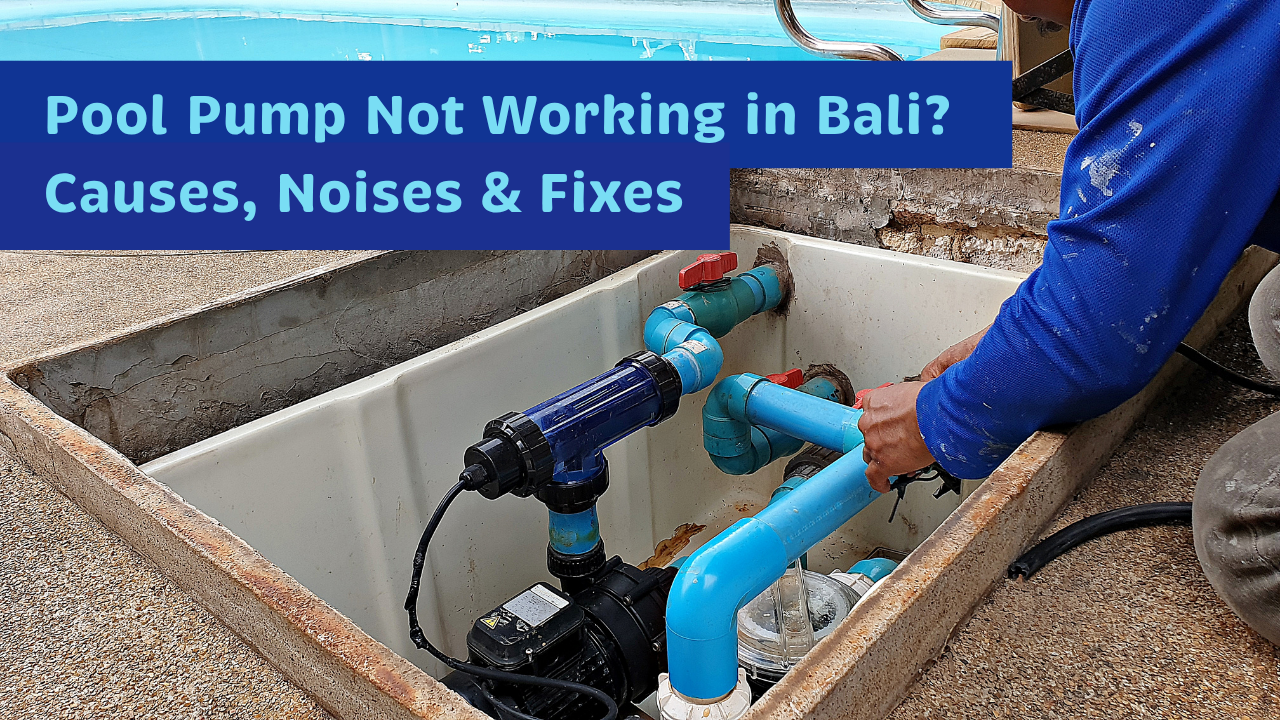
The pool pump is the heart of your pool — it circulates the water so the filter can clean it and the chemicals can do their job. When it stops, everything stops. Within a day or two of a dead pump in Bali’s heat, the water goes still, the chemistry drifts, and the pool starts heading green. So a pump problem isn’t something to leave until next week.
The good news: pump faults follow predictable patterns, and the symptom usually tells you what’s wrong. This guide helps you diagnose it fast — whether the pump won’t turn on, is making an alarming noise, isn’t pulling water, or keeps shutting off — and tells you what’s a quick fix versus a job for a technician.
One safety note first: a pool pump combines electricity and water. Checking the basket or priming it is fine. Opening the motor, touching wiring, or poking around a pump that’s tripping the power is not — that’s where you stop and call someone.
Quick diagnosis: match your pump’s symptom
| Symptom | Most likely cause | DIY-able? |
|---|---|---|
| Won’t turn on at all | Power/breaker, failed capacitor, burnt-out motor | Check power only — rest is a tech job |
| Humming but not spinning | Failed capacitor or seized motor | No — needs a technician |
| Running but no water / loses prime | Air leak, clogged basket, low water level | Often yes |
| Grinding or screeching noise | Worn motor bearings | No — repair/replace |
| Rattling / gravelly noise | Cavitation or debris in the pump | Sometimes |
| Leaking water | Failed shaft seal or loose unions | Sometimes (unions); seal = tech |
| Keeps shutting off | Overheating, electrical fault, blockage | Check airflow/blockage; else tech |
Now the detail on each.
The pump won’t turn on at all
Nothing happens when it should be running. Work through, in order:
- Power and breaker. Check the pump’s breaker hasn’t tripped and any timer is actually calling for the pump to run. A tripped breaker that keeps tripping when you reset it means an electrical fault — stop and get it checked, don’t keep resetting it.
- The timer or controller. A failed timer can stop the pump getting power even though the pump is fine.
- The capacitor. Pool pump motors use a start capacitor that commonly fails — often the reason a pump won’t start (see “humming” below).
- The motor. If power is reaching the pump and it still does nothing, the motor may have burnt out — common in older pumps, and accelerated by Bali’s conditions.
If it’s not simply a tripped breaker or timer, this becomes an electrical diagnosis best left to a technician.
The pump hums but doesn’t spin
A humming pump that isn’t turning is a classic, specific fault: usually a failed start capacitor, or a seized motor. The capacitor gives the motor the jolt it needs to start spinning; when it dies, the motor just hums and can overheat. This is a common, fixable repair — but it’s an internal electrical part, not a DIY job. Switch the pump off (a humming, non-spinning motor can burn itself out) and call for a repair.
The pump runs but isn’t pulling water (or loses prime)
The motor sounds fine but water isn’t moving, or the pump keeps losing prime. This one is often owner-fixable and usually comes down to air getting in or a blockage:
- Clogged pump or skimmer basket. The most common cause. Switch off, open the basket, clear the debris. In Bali’s leaf-heavy gardens this happens often.
- Low water level. If the water has dropped below the skimmer, the pump sucks air instead of water. Top it up — and if the level keeps dropping, you may have a leak, which is its own problem.
- Air leak on the suction side. Air bubbles coming back through the return jets point to air being drawn in through the pump lid, a loose union, or the suction plumbing. Check the pump lid O-ring is clean and seated and the lid is tight.
- A closed or wrong valve setting. Simple, but worth checking.
If the basket’s clear, the water’s up, and it still won’t prime, the air is getting in somewhere in the plumbing — time for a technician to pressure-check it.
The pump is making a noise
The type of noise is the diagnosis:
- Loud humming (not spinning): capacitor or seized motor — see above.
- Grinding or high-pitched screeching: almost always worn motor bearings. Bearings wear out, and once they’re screeching they’re near the end. This gets worse, not better — plan the repair or motor replacement.
- Rattling or gravel-like noise (cavitation): the pump is struggling to get enough water — often a restricted or clogged intake, a blockage, or an undersized/starved suction line. Clear baskets and check for restriction; if it persists, get it looked at.
- Vibrating/buzzing against the pad: sometimes just loose mounting, sometimes internal.
A pump that’s suddenly gotten loud is telling you something is wearing out. Don’t wait for it to seize.
The pump is leaking water
Water pooling under or around the pump usually means:
- A failed mechanical shaft seal — the seal between the motor and the wet end. This is the most common leak point and needs replacing by a technician (running it dry-leaking can damage the motor).
- Loose or worn unions/fittings on either side of the pump — sometimes just a tightening or a fresh O-ring.
- A cracked pump housing — from age, or from someone over-tightening. Usually means a replacement part.
A small union drip you can sometimes sort yourself; a seal leak is a repair.
The pump keeps shutting off by itself
It runs, then stops after a while:
- Overheating. The most common cause, and Bali makes it worse — pumps in hot, enclosed, poorly-ventilated equipment areas overheat and cut out on thermal protection. Improve airflow around the pump and keep it out of direct sun if possible.
- Electrical fault tripping the breaker — needs checking, don’t just keep resetting.
- A blockage making the motor work too hard and overheat.
If it’s not simply an airflow/ventilation fix, get the electrics checked before the motor is damaged.
Why Bali is especially hard on pool pumps
Pumps here fail sooner than owners expect, for reasons specific to the island:
- Heat and humidity stress the motor and accelerate wear, and encourage corrosion inside the equipment area.
- Salt air near the coast (Canggu, Seminyak, Uluwatu, Sanur) corrodes motor components and fittings faster.
- Voltage fluctuations and outages are hard on electric motors and capacitors — a real factor in parts of Bali.
- Long running hours. Tropical pools need the pump running many hours a day, every day — more than a temperate pool — so the same pump simply does more work here.
None of this is a reason to buy the cheapest pump — it’s the reason to buy a quality one and keep it well-ventilated and maintained. A cheap pump in Bali’s conditions is a false economy that fails fast.
Repair or replace?
Rough rule: repair if the pump is otherwise sound and the fault is a capacitor, seal, bearings or fittings on a reasonably modern, good-quality pump. Replace if the motor is burnt out, the pump is old and corroded, it’s an underpowered or poor-quality unit, or the repair cost approaches the price of a new pump. A technician can tell you honestly which side of that line you’re on — and a good one won’t push a replacement you don’t need.
Don’t ignore a dead pump
While the pump is down, your pool isn’t circulating or filtering. In Bali’s climate that means the water will start turning green within a day or two, and the longer it sits, the more you’ll spend on a rescue on top of the pump repair. Treating a pump fault promptly is almost always cheaper than treating a pump fault and a green pool.
Pump playing up? Get it diagnosed fast
If your pump won’t start, is making a noise it didn’t used to, or isn’t moving water, don’t wait for the pool to follow it downhill. Send us the symptom (a short video of the noise helps) and we’ll diagnose it, quote clearly before any work, and repair or replace as needed.
Message us on WhatsApp for urgent pool pump repair → We repair and replace pumps, filters and equipment across Bali’s main areas — Canggu, Seminyak, Ubud, Uluwatu and Sanur — and report back in writing. New to villa ownership? Start with our owner’s guide.
Frequently asked questions
Why is my pool pump humming but not turning on? Usually a failed start capacitor or a seized motor. The capacitor gives the motor the push it needs to start spinning; when it fails, the motor hums and can overheat. Switch the pump off so it doesn’t burn out, and have the capacitor or motor checked — it’s a common, fixable repair but not a DIY one.
Why is my pool pump not pulling water or losing prime? Most often a clogged pump or skimmer basket, a water level that’s dropped below the skimmer, or air being drawn in through the pump lid or suction plumbing. Clear the basket, top up the water, and check the lid O-ring and unions. If it still won’t prime, there’s an air leak in the lines that needs a technician.
My pool pump is making a loud grinding noise — what is it? A grinding or screeching pump almost always means worn motor bearings. It only gets worse and can lead to the motor seizing, so plan a repair or motor replacement rather than running it until it fails.
How long do pool pumps last in Bali? Often less than owners expect. Heat, humidity, coastal salt air, voltage fluctuations, and long daily running hours all shorten pump life here. A quality pump that’s well-ventilated and maintained lasts significantly longer than a cheap one run hard in a hot equipment cupboard.
Should I repair or replace my pool pump? Repair if it’s a good-quality, reasonably modern pump with a fixable fault like a capacitor, seal or bearings. Replace if the motor is burnt out, the pump is old and corroded, it’s underpowered, or the repair cost is close to a new unit. A technician can tell you which applies before you spend anything.
What happens to my pool if the pump stops? The water stops circulating and filtering, so in Bali’s heat it drifts out of balance and starts turning green within a day or two. That’s why a pump fault should be treated quickly — leaving it means paying for a green pool rescue on top of the pump repair.
This article is general guidance. A pool pump involves electricity and water together — if the pump is tripping the power or you’re unsure, don’t keep resetting it or open the motor yourself; have it checked by a professional.
gedeadiaryanata
Pool specialist · Bali Pool CarePool specialist with 8+ years across Bali, Lombok, and Nusa Penida. Founder of Bali Pool Care.