
Saltwater vs Chlorine Pool in Bali: Which Is Better for Your Villa?
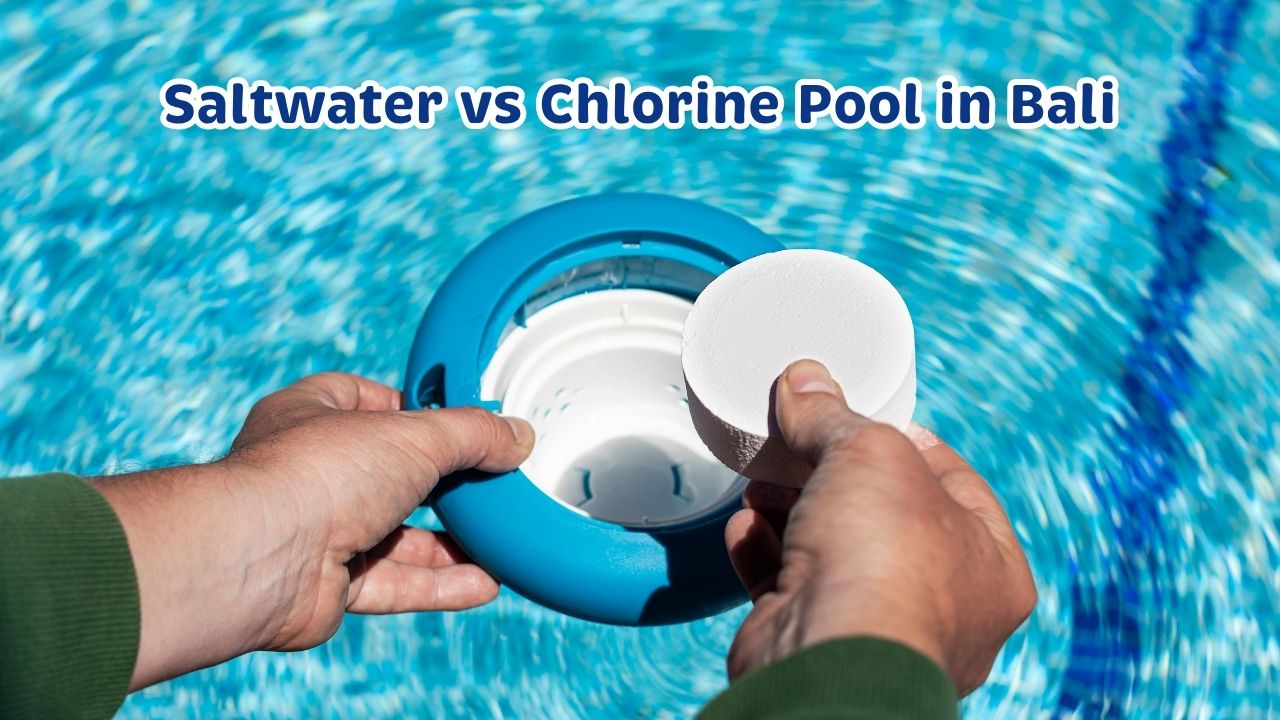
“Should I convert to saltwater?” is one of the questions we hear most from villa owners — usually after a guest raves about a salt pool they swam in, or after one too many chlorine deliveries. The honest answer: both systems can run beautifully in Bali, both can run badly, and the right choice depends on your villa, your budget and who looks after the pool. Here is the comparison without the sales pitch.
First, clear up the biggest myth
A saltwater pool is not a chlorine-free pool. A salt chlorinator uses dissolved salt to generate chlorine continuously in the water. The sanitiser is still chlorine — the difference is how it gets there: made on-site steadily, rather than dosed manually. That difference is what drives everything below.
What saltwater does better
- Swimmer comfort. Softer-feeling water, less chlorine smell, gentler on eyes and skin. Guests notice, and for rental villas that is a genuine selling point.
- Steady chlorine delivery. The cell generates sanitiser continuously while the pump runs, smoothing out the peaks and dips of manual dosing — useful in Bali, where heat burns chlorine fast.
- Fewer chemical handling and deliveries. You buy bags of salt occasionally instead of chlorine constantly.
What chlorine does better
- Lower upfront cost. No chlorinator cell to buy — and cells are the expensive consumable of salt systems, needing replacement every few years.
- Simpler equipment. Less to fail, and any technician on the island can service it.
- Kinder to hardware in one specific way: salt water is mildly corrosive, so a salt pool demands salt-rated equipment, and fittings, lights and some finishes wear faster if they were not chosen for salt.
The Bali-specific factors
- Salt does not mean maintenance-free. This is the myth that turns salt pools green. You still need pH management (salt systems push pH up), regular testing, brushing, and cell cleaning. A neglected salt pool fails exactly like a neglected chlorine pool.
- Heat and rain still rule. Wet-season dilution and dry-season UV affect both systems; a salt cell sized too small for a Bali pool cannot keep up in January either.
- Power matters. The cell only makes chlorine while the pump runs — another reason generous pump hours are non-negotiable here.
- Coastal equipment life. If your villa is already in salt air (Canggu, Uluwatu, Sanur), spec everything salt-rated regardless of which system you choose.
So which should you choose?
Choose salt if guest comfort matters (rentals especially), you want steadier day-to-day water, and you are prepared for the upfront cost and periodic cell replacement. Stay with chlorine if you want the simplest, cheapest-to-fix system and your pool is well cared for anyway — a properly maintained chlorine pool feels excellent too. And if your current equipment is due for replacement, that is the natural moment to consider converting, not before.
Either way, the care is what decides the result
We maintain both systems across Bali, and the pattern is consistent: the well-serviced pool wins, whatever is in the water. See real care costs in our maintenance pricing guide, or if you are planning a new build, factor the choice in early — our pool construction cost guide covers equipment decisions.
Message us on WhatsApp for honest advice on your pool system →